We’re OFX. Moving money globally is what we do
We help businesses and individuals to securely send and receive money, without the excessive bank fees.

We offer fast and secure money transfers for…

Businesses
Receive payments, pay staff, invoices or suppliers. We can seamlessly integrate or tailor a solution for your business.

eCommerce
Running an online business? Make and take payments in multiple currencies, from one place.

Individuals
Moving overseas? Paying tax, a mortgage or bills in another country? You can send money to 170+ countries.

Get a great introductory rate for your first personal transfer.
Terms and conditions apply.
Secure and regulated
In the US, we’re registered as a Money Service Business at the federal level with the Financial Crimes Enforcement Network (“FinCEN”). We’re also licensed as a money transmitter by every state regulatory agency that requires a license (every state except Montana and Wisconsin).
We monitor transactions for suspicious activity with sophisticated technology. Our teams are highly trained and we have a dedicated Financial Investigation department that specialises in the detection and prevention of fraud.


How to get started
Create your OFX account
Start your registration online or via the OFX app. We’ll ask for some personal information including your contact details and nationality.
Verify your identity
Verification helps keep our platform safe, so we’ll check your details to ensure everything matches up.
Get your government-issued photo ID. We’ll ask you to submit a photo of yourself and your document and enter your social security number.
One of our OFXperts will call for final verification and to get you ready for your first transfer.
Enter your transfer details
Tell us the amount you want to send or the amount that you want the recipient to receive. See your customer rate.
Next, add your recipient and their account details and choose your payment option.
If everything looks correct, press confirm to lock in your transfer.
Send funds for your transfer
If you’re using Direct Debit we’ll withdraw the agreed amount from your nominated account and send to your recipient.
If you’ve selected a wire transfer, log in to your online banking or visit your branch to make payment. Be sure to follow the instructions in your OFX payment confirmation.
Track your transfer
We will send you email notifications when we receive funds and pay out your transfer to your recipient. You can also opt in for SMS updates or even track your transfer by logging in online or on the app and selecting ‘transfers’ on your home screen.
We’re more than just money transfers.
Stay informed about currencies with these helpful tools.
Currency Outlook, your monthly overview
Markets can be confusing, so we create a jargon-free guide to what could impact exchange rates each month.
Check your currency’s past performance
See a currency pair’s performance over the last few days, weeks, months, or even years.
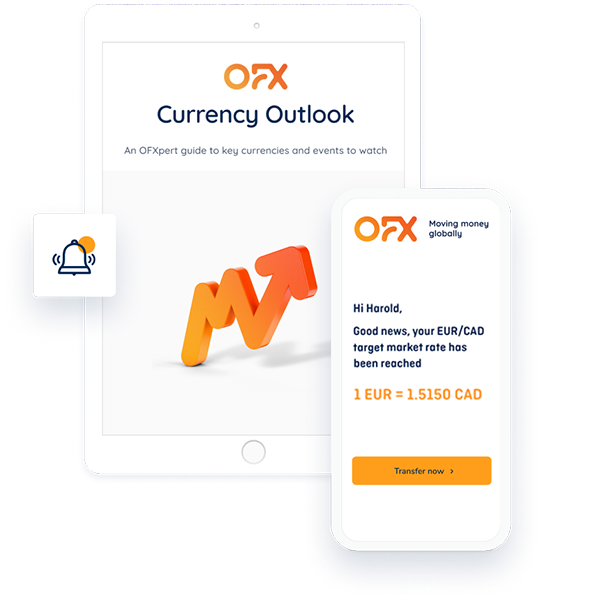
Never miss a rate with Rate Alerts
Got a rate in mind? Set up a Rate Alert and we’ll send you an email or SMS if the target is reached.
See exchange rate cost scenarios
Exchange rates can shift between you receiving an invoice and its due date. See the possible cost range.
Ready to make a transfer? Create your free account to get started.